Avatar 1Avatar 2Avatar 3Avatar 4Avatar 5

친구를 소개할 때마다 10달러의 현금을 획득하세요!

Q2 Earnings Season Starts July 14. Here's What to Watch Before It Begins.

7월 01, 2026

Q2 Earnings Season Starts July 14. Here's What to Watch Before It Begins.

Today marks the end of the best quarter for US stocks in six years. Q2 earnings growth is estimated at 23.1% — well above the 18.8% forecast at quarter-start. Banks report first on July 14. The bar is high, guidance matters more than the beat, and three sectors will decide whether this rally has legs through year-end.


Key Takeaways

  1. Q2 S&P 500 earnings growth estimated at 23.1% YoY — up from 18.8% at quarter-start; revenue growth 12.3% (highest since Q2 2022); net profit margin projected at 14.2%
  2. S&P 500 closed Q2 at 7,449.36 — up 14.9% for the quarter, best since 2020; Nasdaq +21.4% in Q2; Dow all-time record at 52,319.20
  3. 70% of companies issuing Q2 guidance gave positive EPS guidance — vs a 5-year average of 41%; 44 of 63 positive guidance issuers are in Information Technology
  4. JPMorgan, Goldman Sachs, Bank of America, and Citigroup all report July 14-15; Q3 consensus growth: 26.7%; Q4: 24.3%

What Happened

The best quarter in six years ends today — and estimates rose throughout it

Q2 2026 closes with the S&P 500 up 14.9% — its best quarter since 2020 — despite an Iran war, a Fed chair transition, and a brutal final two weeks for mega-cap tech. According to FactSet's Q2 Earnings Insight published today, analysts estimate Q2 earnings growth at 23.1% year-over-year, revised up from 18.8% at the start of the quarter. That is the critical detail: estimates rose as the quarter progressed. Revenue growth is estimated at 12.3%, the highest since Q2 2022. Net profit margin is projected at 14.2% — the second-highest on record since FactSet began tracking in 2009, behind only Q1 2026's 14.8%. Of 111 companies that issued Q2 guidance, 70% gave positive EPS guidance — vs a 5-year average of 41%. Analysts forecast Q3 growth of 26.7% and Q4 growth of 24.3%. Season opens on July 14 with JPMorgan, Goldman Sachs, Bank of America, and Citigroup.


Why It Matters

The beat is already priced in. Guidance decides H2.

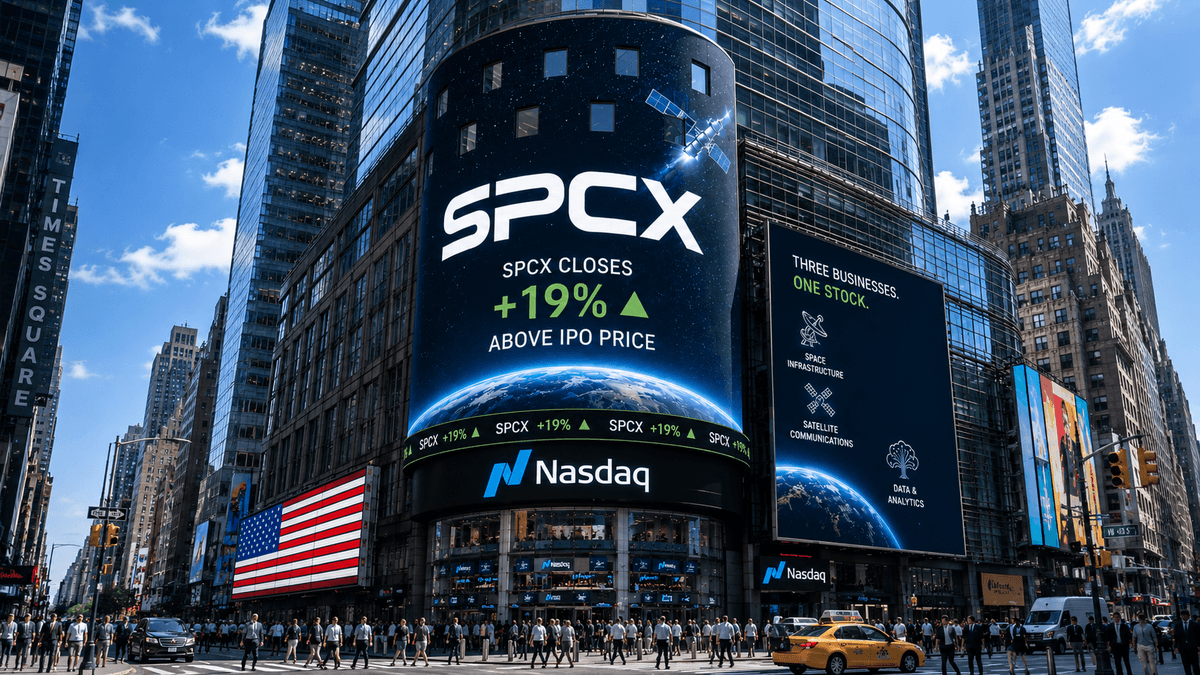
When earnings estimates rise during a quarter rather than fall, it means the fundamental backdrop genuinely improved in real time. That is what happened in Q2: despite the Iran conflict, Warsh's hawkish dot plot, and SPCX's post-IPO volatility, corporate America kept upgrading its own outlook. The 70% positive guidance rate — nearly double historical average — tells you management teams believe H2 is stronger, not weaker. The S&P 500's 14.9% Q2 gain is not a sentiment rally. It has a fundamental anchor.

The setup going into July 14 is asymmetric. With 23.1% earnings growth already expected, companies need to beat and raise guidance to move their stocks higher. A report of 23% growth in line with estimates and flat guidance will likely trade lower — the market will read it as the peak. Three sectors matter most: Financials (banks report first; the Warsh rate regime is a direct NII tailwind), Information Technology (44 of 63 positive guidance issuers; AI capex-to-revenue conversion is the key question), and Energy (largest dollar earnings revision upward this quarter, but oil near $70 means Q3 faces a tougher comparison).

Q2 earnings season opens with the highest bar in years. The companies that clear it easily and raise guidance will lead H2. The ones that merely meet expectations will be sold. In a 23% growth environment, "in line" is the new miss.


One structural concern: while the S&P 500 gained 9.5% in H1, 38% of its members declined. Seventeen of the 20 best-performing S&P 500 stocks were in information technology. Narrow leadership powered a wide index. If Q2 season delivers broad beats across sectors — not just tech — that 38% decliner cohort is the single biggest catch-up opportunity of the year. If only tech beats again, the breadth problem deepens and the rally grows more fragile.


Key Risk: The forward consensus calls for Q3 growth of 26.7% and Q4 of 24.3% — accelerating further at a time when Warsh's dot plot projects a rate hike, oil is falling (headwind for energy earnings), and AI capex-to-revenue conversion hasn't been proven at scale. If even one pillar cracks during Q2 season, the H2 consensus model needs a full reset and the market reprices sharply.


What Traders Should Watch Next

  1. Jul 11 — June CPI, the macro guardrail for earnings season. A soft print below 3.5% collapses October hike odds and earnings season opens into a tailwind. Above 3.8% brings the hike scenario back and puts a ceiling on how much any beat can lift valuations. This number sets the multiple before the first earnings report drops.
  2. Jul 14-15 — JPMorgan, Goldman Sachs, Bank of America, Citigroup. The most important four prints of the season. Under Warsh's hold-then-hike rate regime, net interest income guidance for H2 should be the most bullish bank setup since 2022. Watch NII guidance specifically — not just EPS. A strong NII outlook from all four confirms financials as H2's leadership sector.
  3. Jul 22-25 — Alphabet, Tesla, Meta, Microsoft. With 44 of 63 positive guidance issuers in IT, the bar for tech is the highest of any sector. The key question for each: is AI spending converting into revenue, or is it still only capex? Alphabet and Microsoft have the clearest AI monetization story; Tesla is the wildcard that moves all of consumer discretionary.
  4. Jul 28-29 — FOMC meeting + Amazon and Apple earnings. The Fed meets as earnings season peaks. Soft CPI plus strong earnings equals the best possible setup for equities. If either disappoints, the July 28–29 window becomes the most risk-concentrated two days of the summer. Position sizing matters most in this window.


How to Prepare for Q2 Earnings Season

Season opens in two weeks. The companies that beat and raise will lead H2. Here's how to identify them before they report.

  1. Earnings Calendar: Map the full season now — add JPM, GS, BAC, C (Jul 14-15), GOOGL, TSLA, META, MSFT (Jul 22-25), AMZN, AAPL (Jul 28-29). These nine reports in two weeks will account for more market-moving events than any other fortnight of the year.
  2. Advanced Screeners: Screen for the 38% of S&P 500 stocks that declined in H1 — filter for revenue growth above 10%, positive Q2 guidance, and P/E below 20. These beaten-down names with improving fundamentals are the largest catch-up opportunities of H2 and will re-rate fastest on broad earnings beats.
  3. Watchlists: Build a season watchlist by sector ETF: XLF (financials — reports first), XLK (tech — highest bar), XLE (energy — potential positive surprise), XLV (healthcare — defensive if macro disappoints). Their relative performance during the first week of season tells you everything about breadth.
  4. Price Alerts: Set S&P 500 alerts at 7,600 (new all-time high — confirmed if season delivers broad beats) and 7,200 (support — a break here means the Q2 rally is being fully reversed). These two levels bracket the entire earnings season outcome for H2.
  5. Market Trends: Follow real-time earnings commentary for one data point above all others: AI capex-to-revenue conversion. Every hyperscaler and tech company will be asked about it on their call. The first one to say "AI is now contributing meaningfully to revenue" — not just to spending — will be the catalyst that re-rates the entire sector for H2.

The best quarter in six years just ended. Q2 earnings season decides whether H2 earns it. Profit Pro keeps you positioned for every report.

일반적인 면책조항

이 콘텐츠는 정보 제공을 목적으로 하며, 재정적 조언이나 매매 권유를 구성하지 않습니다. 투자에는 자본 손실의 위험을 포함한 위험이 따릅니다. 과거의 성과는 미래 결과를 보장하지 않습니다. 투자 결정을 내리기 전에 재무 목표를 고려하거나 자격을 갖춘 재무 상담사와 상담하십시오.

이 내용이 유익하다고 생각하셨나요?

👎

아니요

😶

어느 정도

👍

좋음